


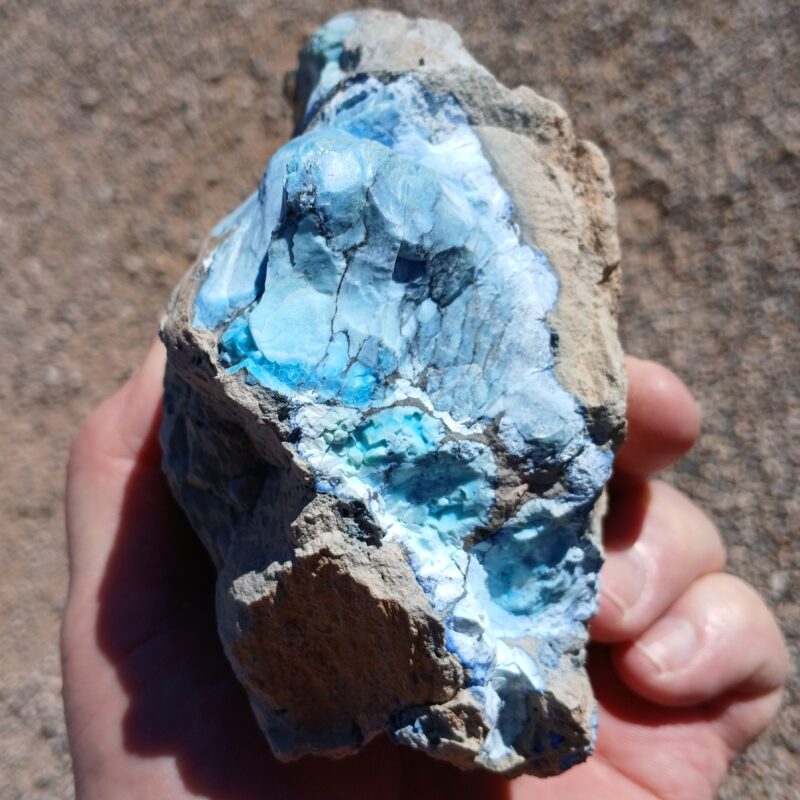
The specimen of uncut lapidary material showcased in the image above might initially seem unremarkable to a great many people. It is a common observation that the exterior presentation of rocks often provides a very misleading impression of the intricate beauty and complex composition found within their internal structure.
Main Categories
Our Latest Additions
-
British Columbia Jade
-
Rosella Opalite
-
Carrasite Jasper
-
Graveyard Point Moss Agate
-
Tiffany Stone
-
Copper Ore
-
Pink Tiffany Stone
-
Petrified Wood with Opal
-
Kona Dolomite with Stromatolites
-
Bubble Lace Agate
-
Arizona Chrysocolla
-
Burro Creek Agate
Our Blog
2026 Cedar City Gem and Jewelry Show
2026 Cedar City Gem and Jewelry Show
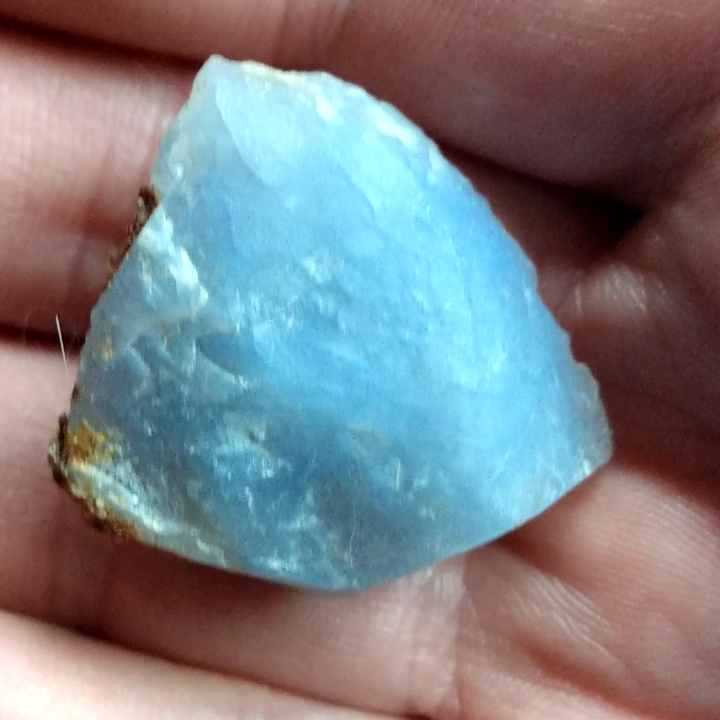
Salina Blue
Salina Blue
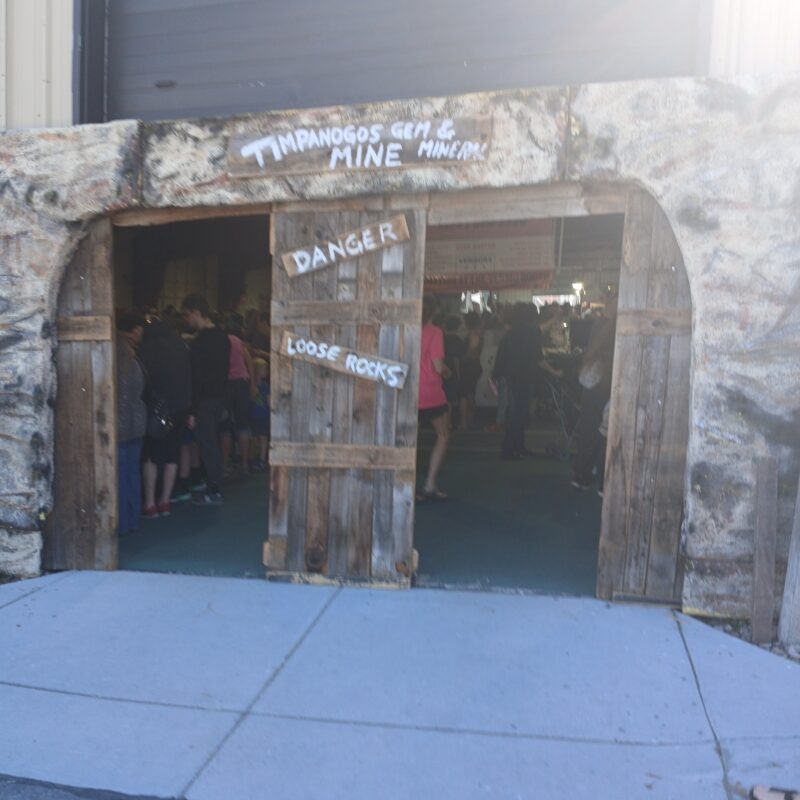
The Timpanogos Gem & Mineral Society’s annual rock and gem show 2026
The Timpanogos Gem & Mineral Society’s annual rock and gem show 2026
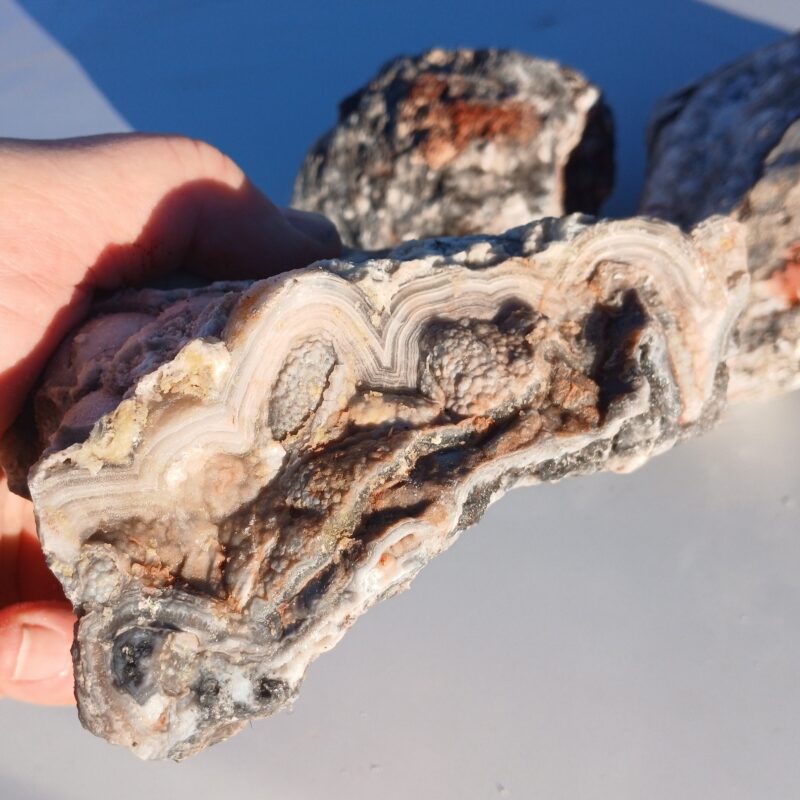
Bubble Lace Agate
Bubble Lace Agate
Nice Hike But Nothing New
Nice Hike But Nothing New
What are lapidary Slabs?
Unpolished slabs of rock or minerals, commonly known as lapidary slabs, find application in a wide array of lapidary endeavors. These slabs serve as the foundation for crafting beautiful pieces through various techniques, including but not limited to the creation of exquisite cabochons, intricate carvings, the mesmerizing process of tumbling to smooth edges, precise faceting to bring out the stone’s brilliance, the art of napping for unique textures, and a spectrum of other specialized stonework applications. While their primary use is in these creative processes, it’s also worth noting that after completion, these slabs can be polished to enhance their aesthetic appeal for display and appreciation.
Slab Thickness
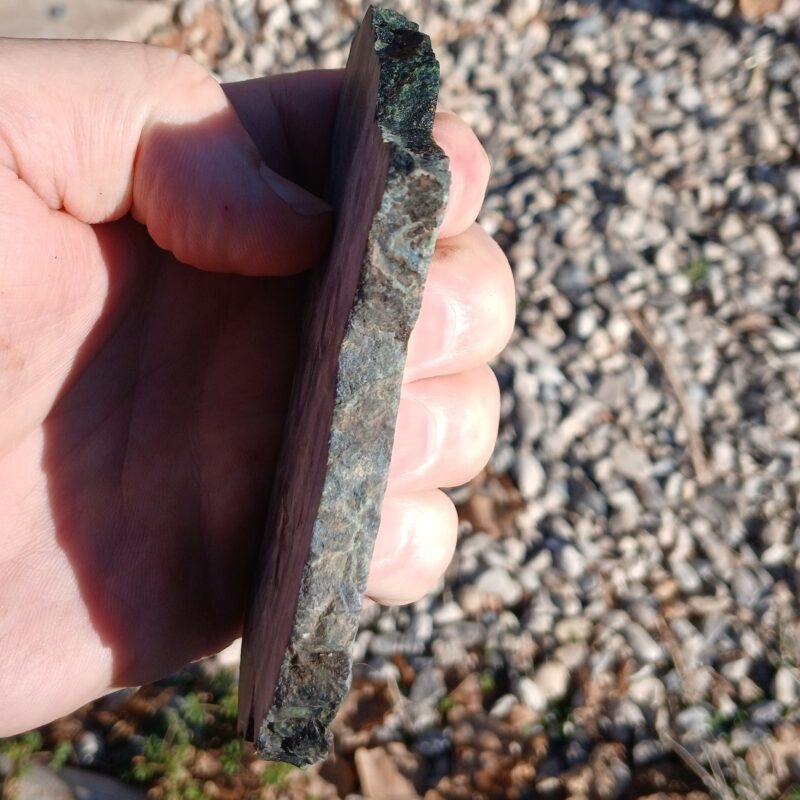
A lapidary slab is shown from the side to reveal its thickness.
The standard thickness for cutting lapidary slabs is typically around 1/4 inch, but the thickness can be adjusted to suit specific needs and desired aesthetic outcomes. Opting for thinner slabs allows for a reduction in the final cabochon’s overall thickness, which is particularly beneficial for jewelry pieces like earrings and pendants, where minimizing weight is a key consideration. Conversely, utilizing thicker slabs provides the opportunity to create cabochons with an exceptionally pronounced dome, a feature that is highly advantageous for translucent materials, as it facilitates the passage of a greater amount of light through the gemstone, enhancing its brilliance and visual impact.
Why purchase lapidary slabs?
The expense of cutting slabs
Acquiring pre-cut lapidary slabs presents a compelling advantage over the alternative of sourcing raw materials and undertaking the cutting process independently. The acquisition of specialized lapidary equipment, encompassing saws and their associated blades, represents a substantial financial investment. Saws, in particular, can command prices ranging from several hundred to thousands of dollars, while individual blades can easily cost hundreds of dollars each. While small trim saws offer a more budget-friendly solution for tasks such as cabbing, napping, or carving, enabling the precise shaping of slabs, they are not designed for the initial cutting of larger slabs from raw materials.
Financial risk of cutting slabs
Acquiring lapidary slabs significantly reduces the likelihood of investing in substandard or otherwise unsuitable materials, as the process of cutting allows for a far more precise evaluation of the stone’s inherent color variations and intricate pattern complexities. This strategic buying method empowers potential customers to make well-considered choices, grounded in a more comprehensive and nuanced comprehension of the stone’s unique attributes, all before any substantial crafting or manipulation is undertaken.
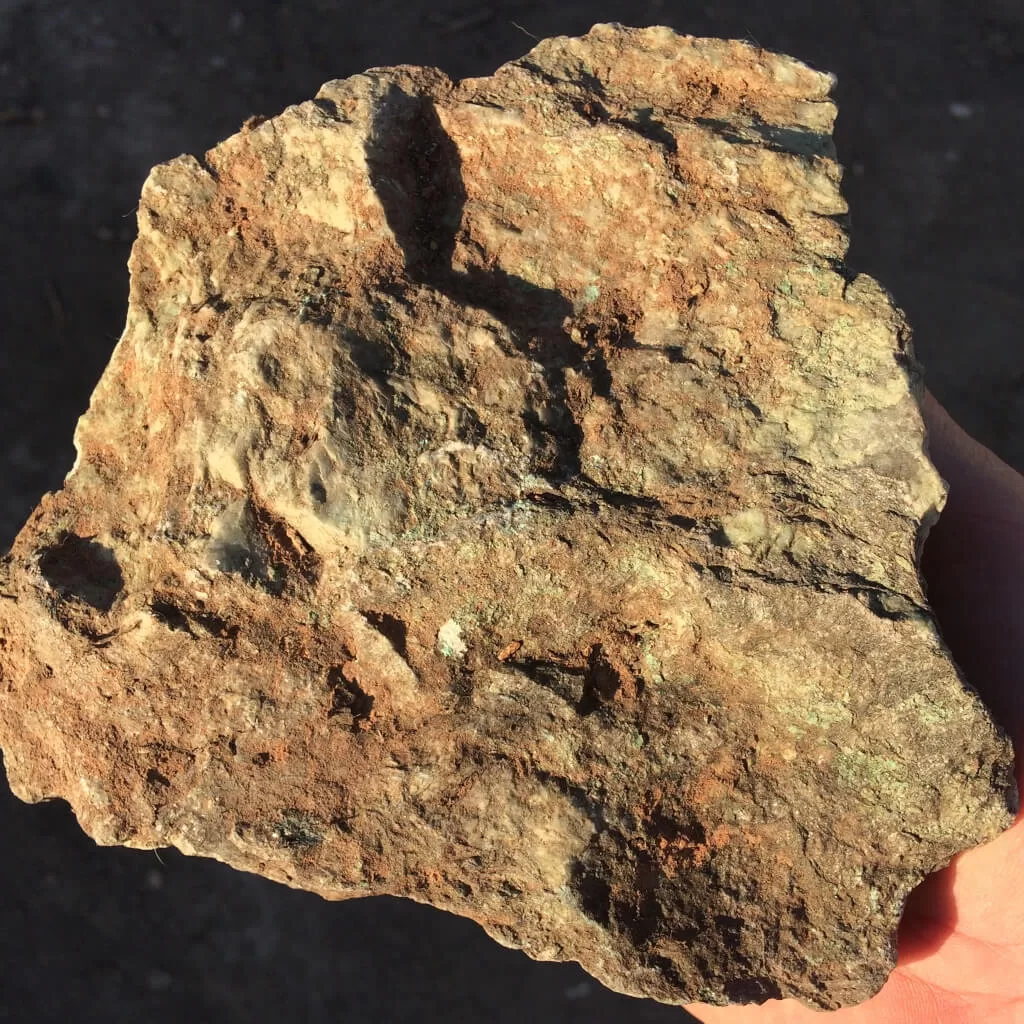
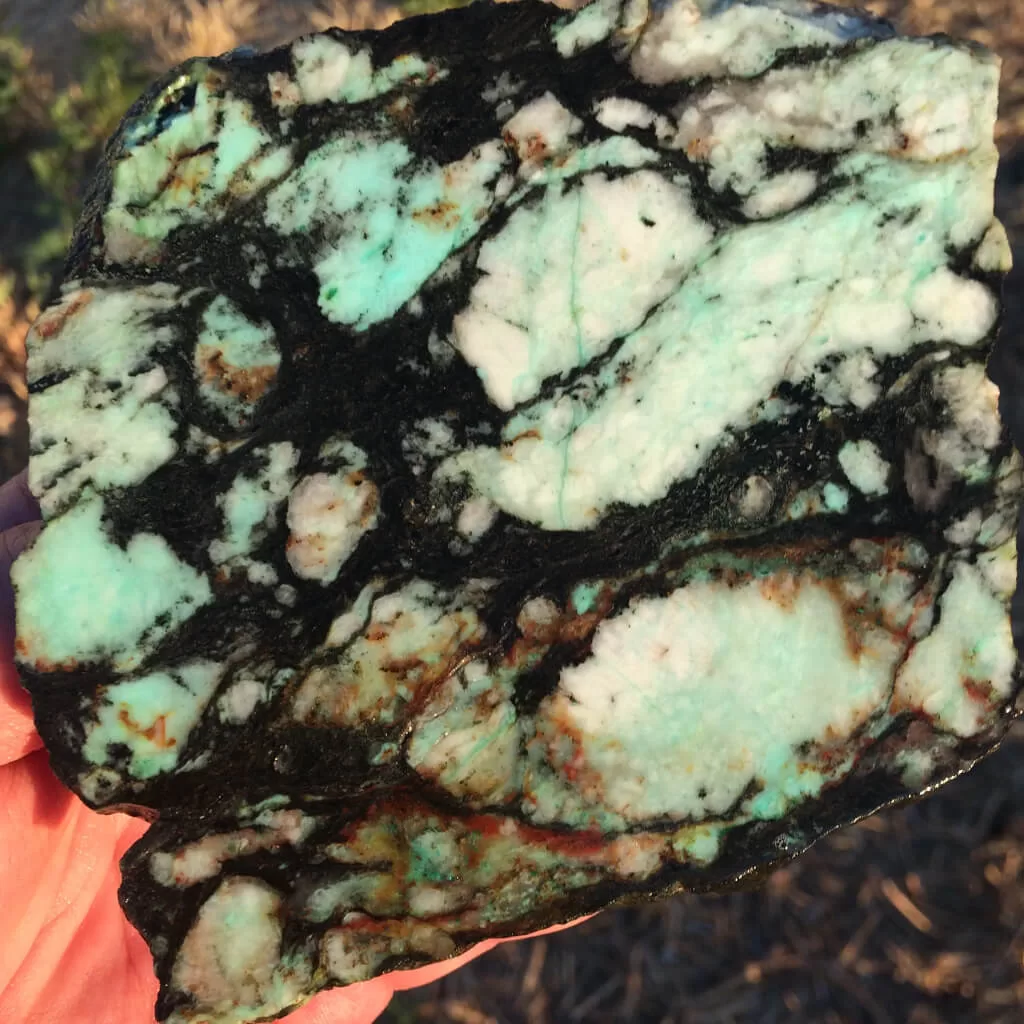
This detailed description captures the essence of the interior of the rock, specifically highlighting the transformation brought about by the cutting process. The exposed quartz, now beautifully stained with chrysocolla, is dramatically set against a backdrop of black and brown hematite, forming a captivating visual contrast. Prior to this unveiling, these internal features remained completely hidden, shielded by the relentless forces of weathering and oxidation that had heavily impacted the rock’s exterior surface, a direct result of prolonged exposure to the elements.
Loss when cutting slabs
When purchasing pre-cut slabs, there is significantly less waste generated compared to working with raw materials. This is primarily because the amount of stone lost during each pass of the saw blade directly relates to the thickness of the blade itself. Additionally, when starting with raw materials, additional waste is inevitable due to imperfections, natural cracks, and the inherent difficulties in cutting certain areas, such as the end cuts, which often present challenges.
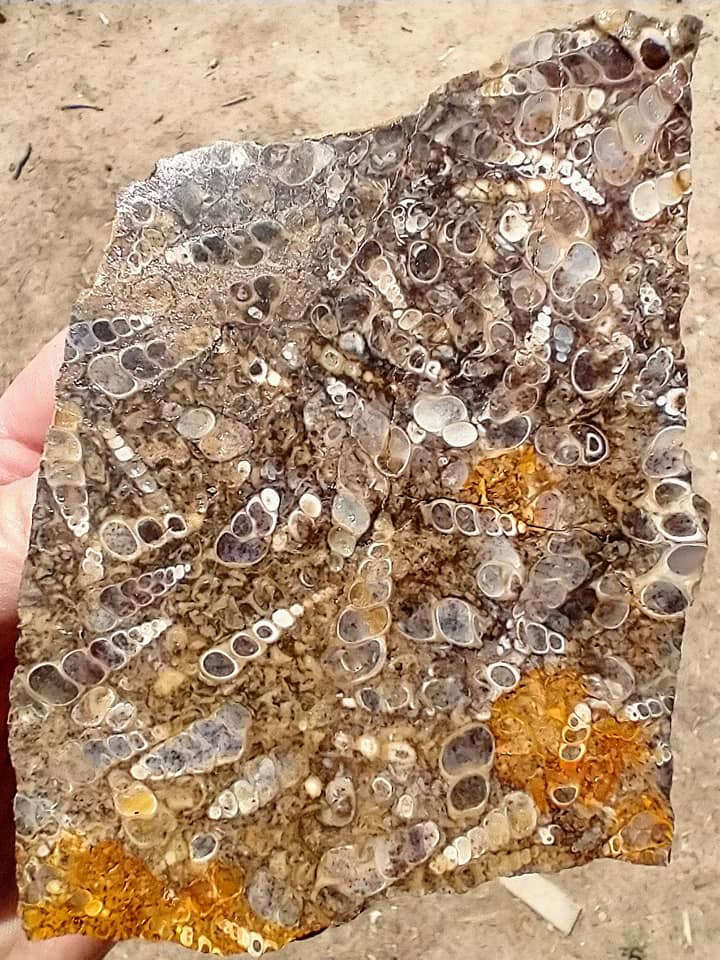
This stunning Turritella Agate lapidary slab immediately captures attention with its remarkable beauty. The image you see here showcases the slab in a wet condition, deliberately emulating the presentation style commonly employed at gem shows. Lapidary slabs are often displayed submerged in water tanks to effectively simulate their appearance after polishing, thereby highlighting their potential and inherent elegance. Moreover, the wet presentation has the added benefit of subtly camouflaging any minor imperfections that might be present in the slab, ensuring the focus remains on its overall captivating allure.
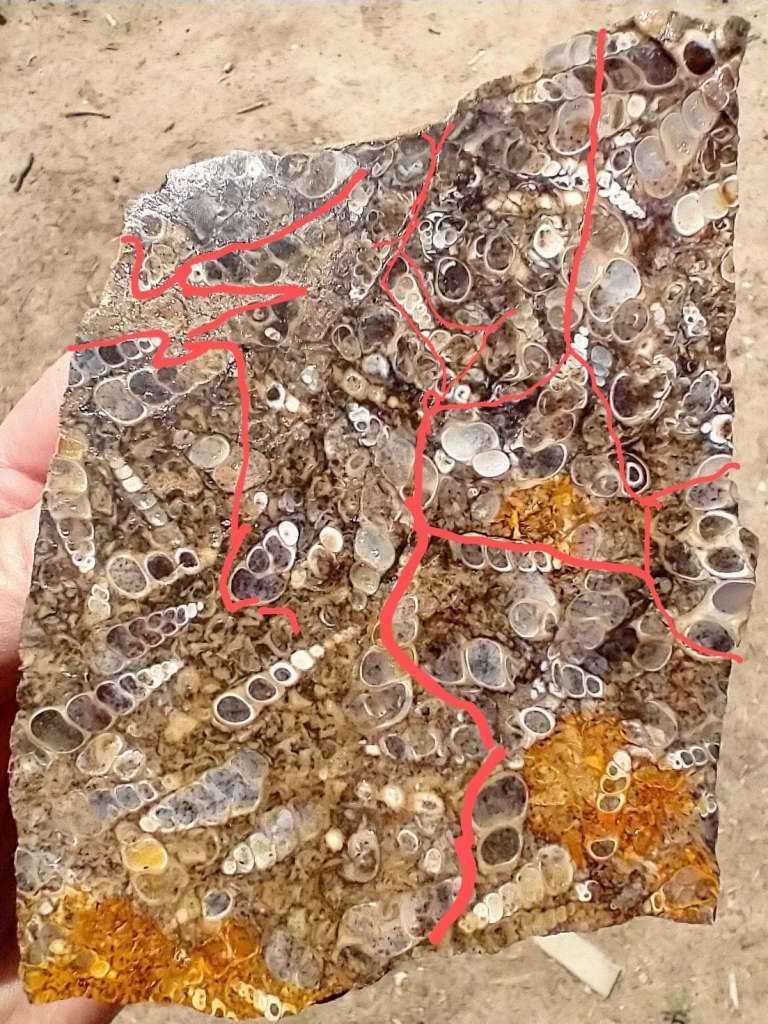
This image is a focused view of the Turritella Agate slab, with specific areas highlighted to clearly demonstrate the presence and extent of the natural cracks within the stone. Many of the most desirable and visually striking shell inclusions, which would ideally be the focal point of a cabochon design, are unfortunately located within these crack patterns. This limitation directly impacts both the achievable size of the cabochons and the overall layout options available for creating finished pieces. While this particular slab may not offer the same boundless creative freedom as a flawless piece, it still holds considerable potential. With careful consideration and strategic design choices, it can yield several beautiful and unique cabochons. Therefore, although the initial impression might be one of broad possibilities, a closer examination reveals the subtle constraints imposed by the inherent structure of the stone.
The perceived appeal and value of raw lapidary materials can be quite deceptive, as they often conceal significant flaws that become evident only after they are cut into slabs. These flaws can include unsightly pitting, areas of undesirable softness, and unappealing color variations or patterns, rendering the material commercially useless. Consequently, because the risk of loss during the cutting process is considerably reduced, slabs, when sold by weight, can command prices several times higher than the initial rough material. Furthermore, those slabs that display exceptional beauty and rarity may be priced even more substantially, and in some cases, may not even be offered for sale at all due to their unique and highly desirable qualities.
Articles
What is the difference between Jasper, Agate, Chalcedony, Flint, and Chert?
What is the difference between Jasper, Agate, Chalcedony, Flint, and Chert?
What are the Most Expensive Collectible Rocks & Minerals?
What are the Most Expensive Collectible Rocks & Minerals?
How to Determine if an Emerald is Real or Synthetic
How to Determine if an Emerald is Real or Synthetic
Green Variscite: Natures Turquoise Without the Copper
Green Variscite: Natures Turquoise Without the Copper
Non-Diamond Engagement Rings and Gemstone Alternatives