

Rocks, Slabs, and Minerals as an Investment
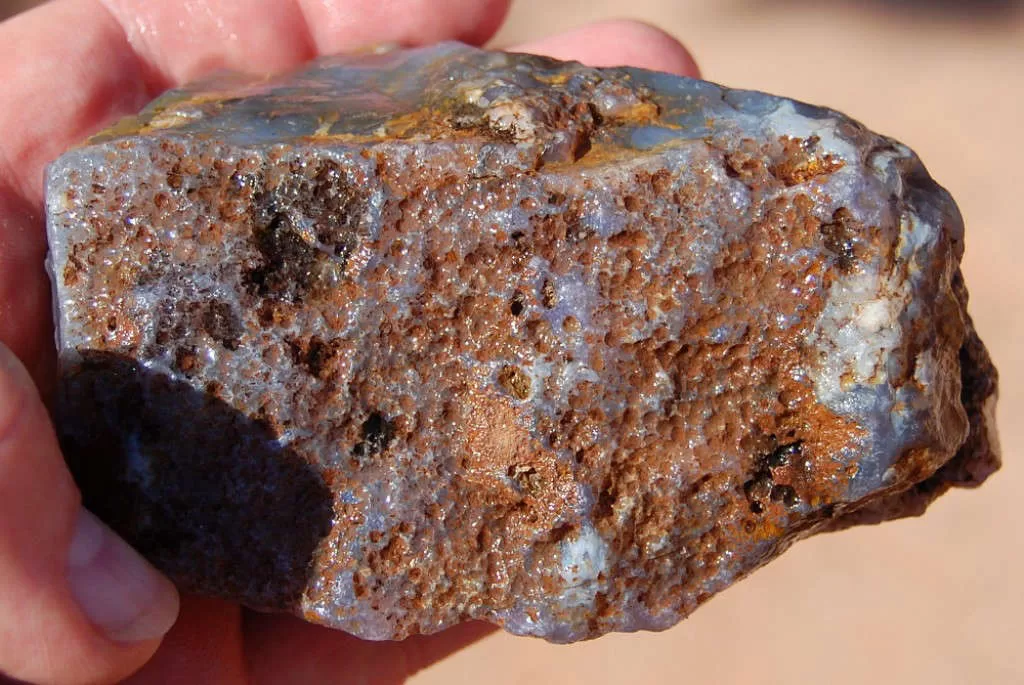
Blue Holley Agate: Due to the closure of the collection area, the price of this stunning agate has escalated dramatically, making it a valuable asset in the authors’ collection.
The investment landscape inherently involves risk; however, most investors prioritize opportunities that offer minimal risk exposure and the potential for substantial returns. While gold and silver are conventional investment options, have you considered the unique asset class of investing in rocks? By becoming knowledgeable about the products, acquiring expertise in sound investment strategies, and establishing key relationships, it is feasible to transform a hobby into a viable profession.
What To Look For When Investing In Rocks & Minerals
The acquisition of commodities necessitates a comprehensive comprehension of the product. Prudent investment strategies may yield substantial financial rewards, whereas ill-considered choices may result in a collection of items with minimal commercial value.
Valuable Tips When Investing in Rocks & Gemstones
Research the rock, mineral, or gemstone.
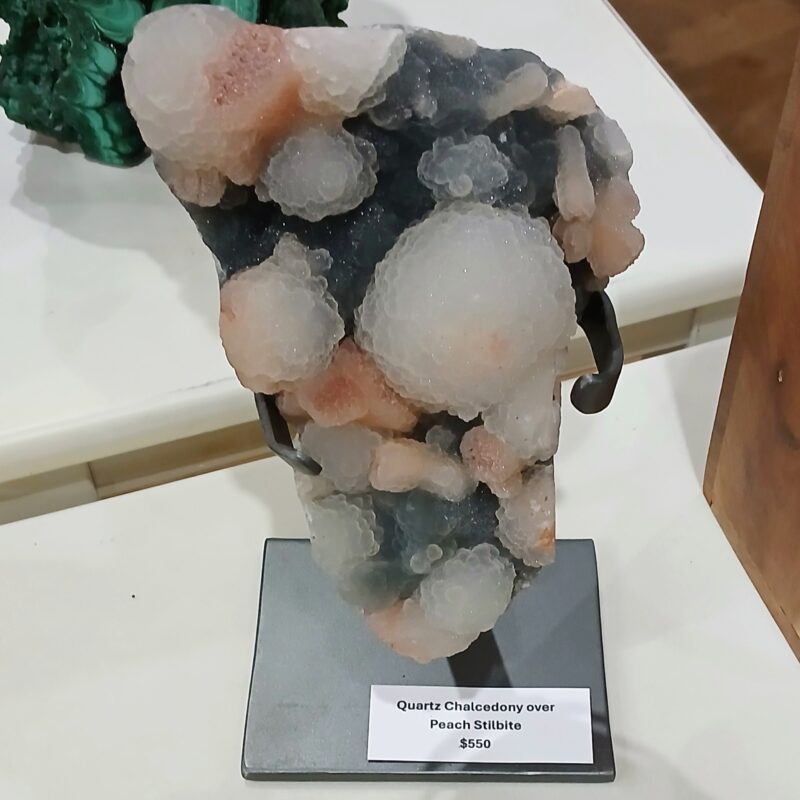
Quartz Chalcedony over Peach Stilbite
The acquisition of knowledge represents the fundamental principle of successful investment practices. Prior to any financial commitment, a comprehensive investigation of the specific rocks, minerals, or gemstones of interest is essential. Such knowledge enables the investor to distinguish between inferior and superior materials, facilitating judicious purchases at optimal market prices. Cultivating expertise in the identification of high-quality specimens will permit the recognition of promising opportunities as they arise, enabling the investor to take advantage of them before they enter the mainstream market, thereby substantially increasing investment returns.
Buy the highest quality material you can afford
Online and local rock shops frequently present specimens identified as “rare,” yet numerous examples exhibit such inferior quality that they lack market demand. It is advisable to prevent accumulating a collection of valueless items that cannot be utilized or resold.
Understand the potential long term availability of the rock or mineral
It is essential to remember that the principle of supply and demand is fundamental to investing in any commodity. Therefore, one should prioritize rocks and minerals that are both visually appealing and possess the highest potential for generating significant demand.
It is beneficial to focus on rocks and minerals with limited availability, as many originate from small deposits and may only be accessible for a limited time, potentially ranging from a few months to a few years. However, this approach may be disadvantageous if the deposits are so small that they are not well-known within the collecting community, thus generating no market demand.
Getting Even Higher Returns On Your Investment
Breaking down and selling part of your larger parcel by the individual piece can often pay for itself.
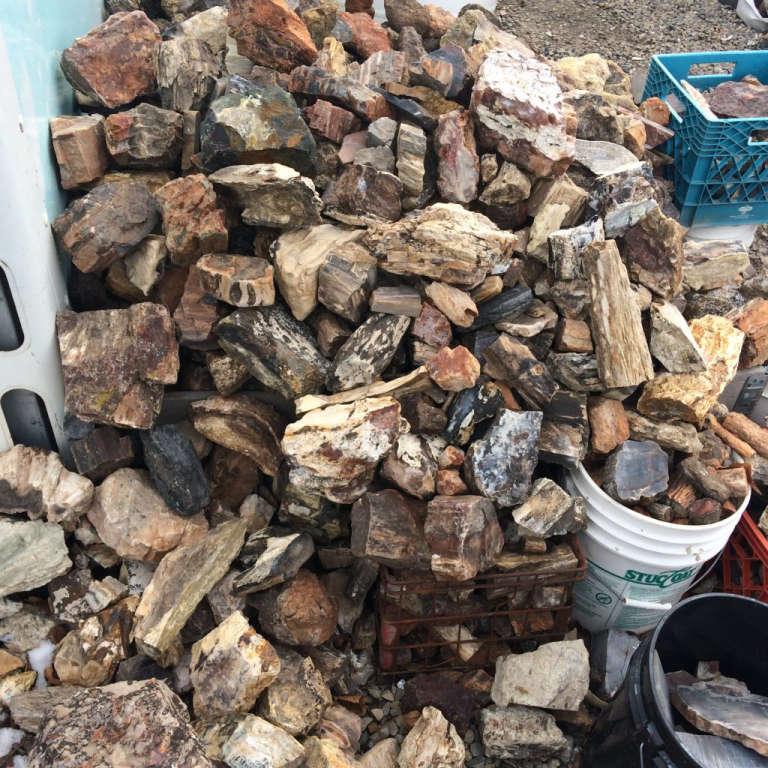
This substantial collection of petrified wood presents a promising investment opportunity, contingent upon being offered at a competitive price; however, restricted market demand could limit the potential for achieving optimal returns.
An astute investor can recover their initial investment by retaining a portion of their acquisition and selling the remainder in smaller quantities.
Profits can be augmented by cutting individual rocks into slabs. Slab saws are available in various sizes, with smaller models costing less than $500 and larger models potentially exceeding $10,000.
Proficiency in identifying high-quality materials is essential in this context. Transforming a rock into quarter-inch thick slabs can potentially increase profits tenfold; however, if the initial investment was subpar, resulting in low-quality slabs, the outcome could be an unusable accumulation of rock material.
Consider investing in newly discovered rocks and minerals.
Investing in newly discovered rocks and minerals can prove to be a financially rewarding endeavor, particularly after achieving a comprehensive understanding of prevailing market dynamics. Such deposits frequently exhibit the most substantial potential for returns. Generally, newly identified materials are initially offered at reduced prices, a condition that typically continues until market demand intensifies. This period often presents advantageous opportunities to procure high-quality specimens in substantial quantities.
Buying in larger quantities can help maximize your return.
When a commodity is readily accessible, acquiring it in bulk can result in reduced costs. Nevertheless, even frequently encountered rocks and minerals may experience scarcity over time, and their value typically escalates as the supply decreases.
Purchasing old collections can present a unique investment opportunity.
The acquisition of established collections may present a singular investment opportunity. Such collections are frequently transacted as a single, comprehensive lot rather than being offered in smaller quantities or individually. These older collections often contain rare and valuable materials. Product expertise is paramount to achieving profitability when acquiring these collections. These collections are frequently stored outdoors and can appear to be an accumulation of worthless materials or, indeed, may actually be so.
Breaking it Down Even Further
Lapidary rough can be sawn into slabs; however, a significant degree of risk is associated with this process. While cutting the rough may reveal the inherent beauty of the rock, potentially enhancing its value considerably, it can also result in a complete loss, exposing unattractive, unusable material.
Slabs may be further processed by cutting them into cabochons for use in the creation of jewelry, which can potentially augment the value of the investment, provided the process is executed with skill and prudence. It is essential to note that when cutting slabs into cabochons, a substantial amount of material is typically lost, although the potential returns on investment can be considerable. The machinery required for cutting cabochons necessitates a significant financial outlay, often exceeding several thousand dollars.
Taking Advantage of Where You Live
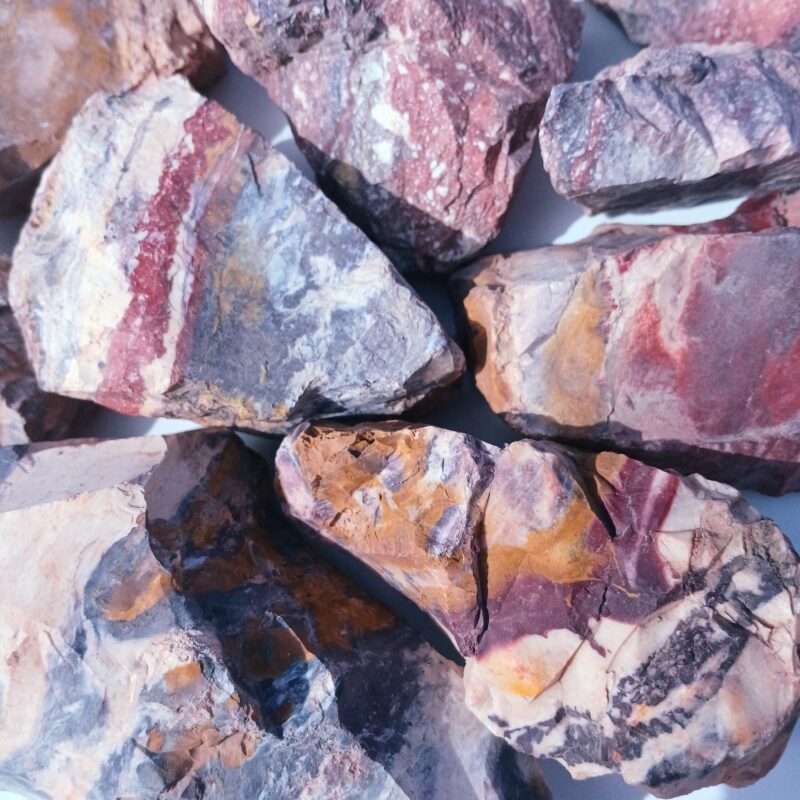
This Indian Blanket Jasper rough was acquired from a local landscaping business prior to its increased popularity within the lapidary community. The early acquisition at a reduced price also presented an opportunity to obtain the highest quality material available.
Acquiring rocks and minerals locally presents several advantages. Regardless of geographic location, it is probable that various rock and mineral specimens can be located within the immediate vicinity. These specimens can often be obtained through personal collection or purchased at competitive prices from local establishments. Furthermore, it is possible to discover exceptional specimens at local landscaping businesses.
Prior to engaging in any collection activities, it is imperative to become acquainted with pertinent local regulations. Collection activities on public lands are typically restricted to personal use only. Commercial sales generally necessitate the acquisition of appropriate permits.
Local rock and mineral establishments serve as valuable resources for procuring high-quality specimens at reasonable prices. It is essential to acknowledge that market prices for rocks and minerals can fluctuate significantly within short periods, and local establishments may not always promptly adjust their pricing to reflect current market values.
Local gem and mineral exhibitions offer advantageous opportunities for identifying investment-grade materials. These events also provide an opportunity to evaluate quality distinctions firsthand.
Readily available Rocks and Minerals
Presented below is a selection of rocks and minerals that are currently available at the time this article was written*. They are both aesthetically pleasing and affordable. Many of these specimens possess the potential for appreciation in value over time:
*Edit: After only a few years, many of the rocks on this list have had significant price increases indicating that these materials were in fact great investment opportunities. If this list were written today, it would look completely different.
- Pope Creek Brecciated Jasper
- Rhodonite
- Gela Monster Jasper
- Volcano Agate
- Owyhee Picture Jasper
- Peruvian Chrysocolla
- Mariposite
- Mexican Crazy Lace Agate
- Cady Mountain Jasper
- Rocky Butte Jasper
- Succor Creek Picture Jasper
- Biggs Picture Jasper
- Deschutes Picture Jasper
- Peruvian Pink Opal
- Indonesian Fossil Coral
- Noreena Jasper
- Rainbow Obsidian