

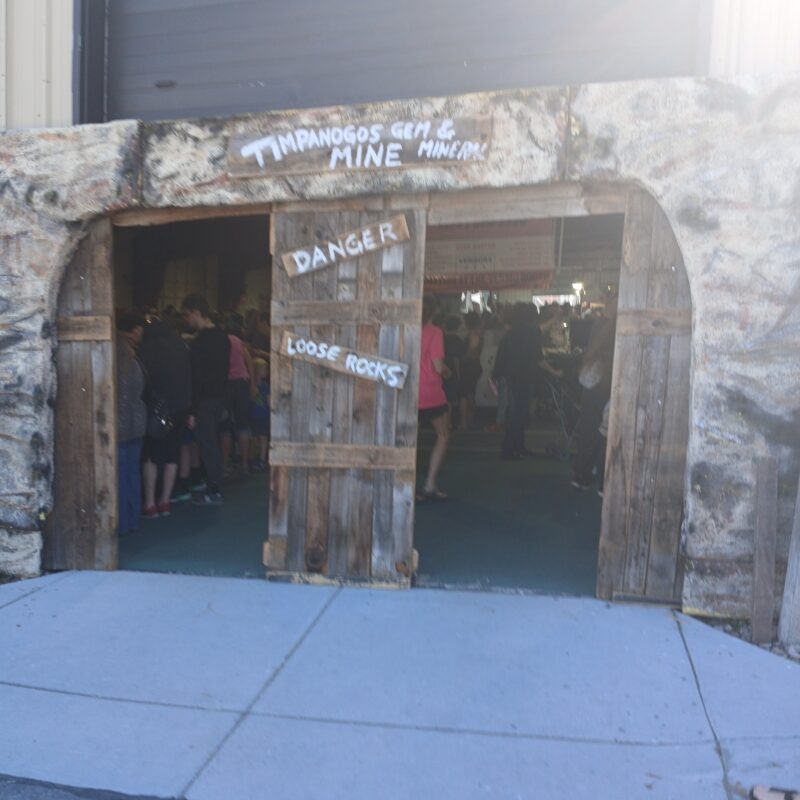
The entrance to the Timpanogos Gem & Mineral Show
On March 21, 2026, we attended the Timpanogos Gem & Mineral Society’s annual rock and gem show. The event was well-attended, displaying a bustling atmosphere. While this rock and gem show was larger and busier than our visit last week Cedar City, it offered fewer purchasing opportunities for us compared to the show in Cedar City.
The event featured a higher proportion of finished products, whereas our primary interest lay in lapidary rough material. While the show did not fully meet our specific needs, it did present an array of attractive rock and gem products suitable for both collectors and those seeking finished items.
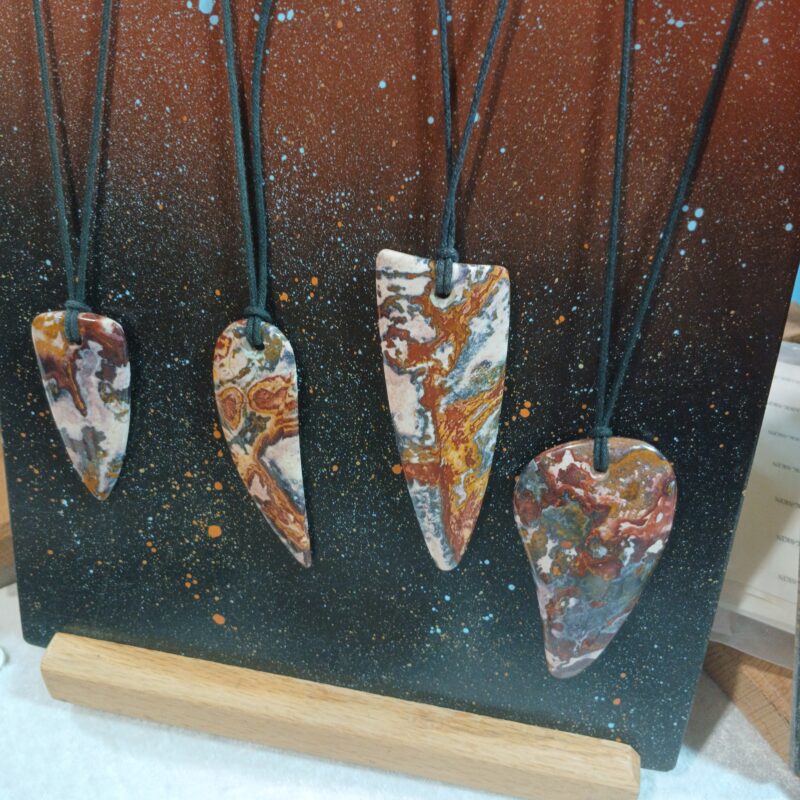
Nice Indian Blanket Jasper necklaces
Notably, we were impressed by the quality of the Indian Blanket Jasper used by one vendor to create necklaces. Indian Blanket Jasper is a local jasper sourced from Enterprise, Utah.
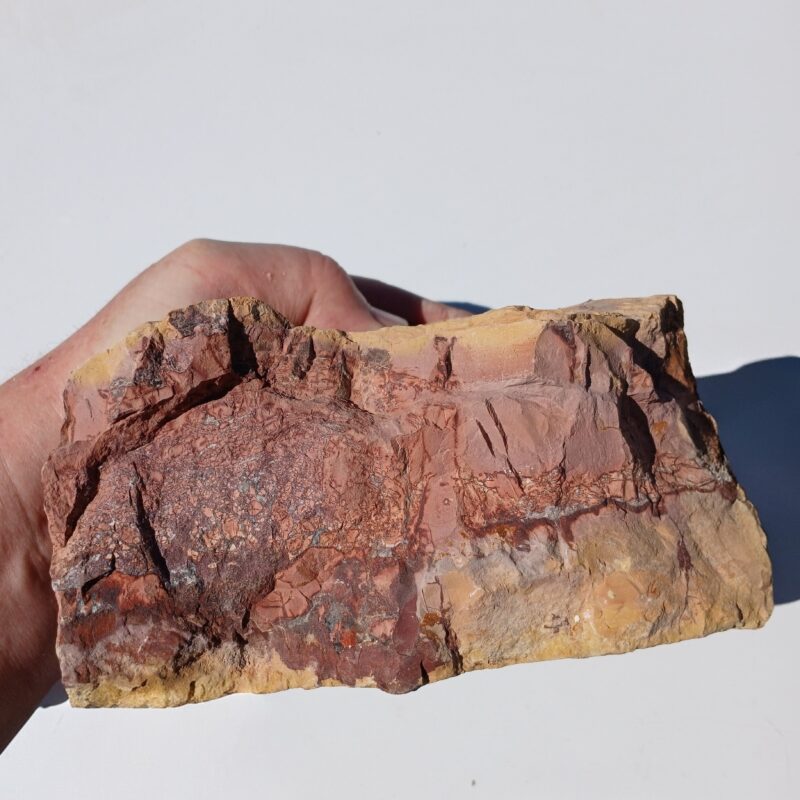
Casablanca Jasper
Our primary objective in attending the gem show was to acquire lapidary rough material. However, only one vendor offered such items in any sort of quantity, and their prices were deemed too high. Consequently, we did not make any purchases, except for some jasper originating from Morocco, which the vendor identified as Casablanca Jasper. The vendor mentioned that it was also known by other names, but he could not recall them. Subsequent research revealed Moroccan Jasper three types of jasper with a similar appearance. The jasper we purchased most closely resembled Moroccan Picture Jasper, although Morocco High Atlas Jasper also presented a strong match in both appearance and characteristics. We also observed a similar material being marketed as Moroccan Mookaite Jasper. It would be surprising if these three jaspers were, in fact, the same material, marketed under different names to increase market presence.
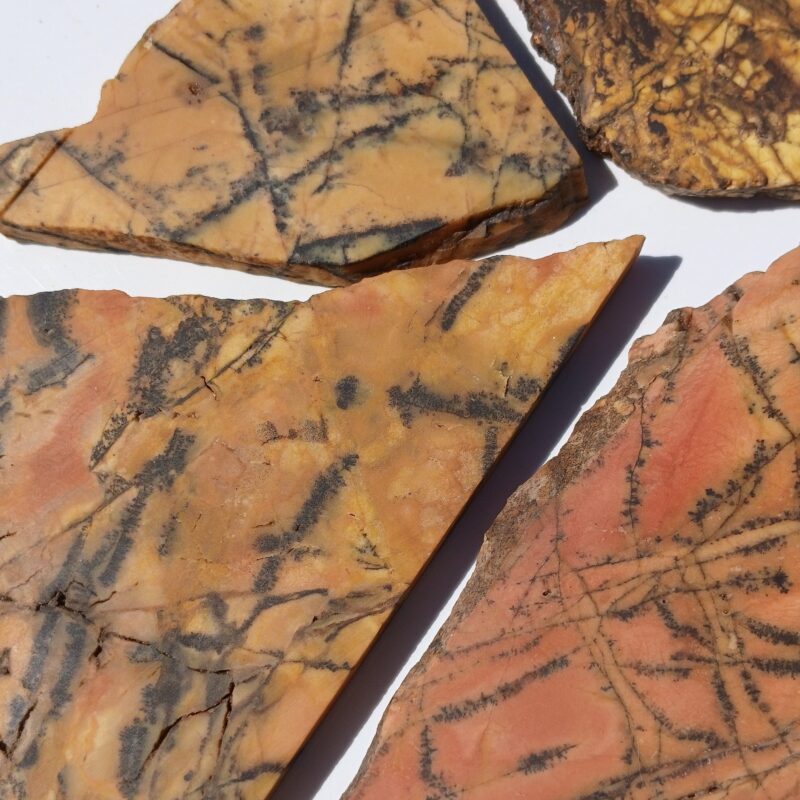
Yellow Feather Jasper
Despite the limited availability of lapidary rough material, numerous vendors offered lapidary slabs for sale, with many providing high-quality and affordable options. One vendor, in particular, was selling Yellow Feather Jasper, a rare, multi-colored dendritic jasper found in Utah. This Jasper was on our want list and recognizing its rarity and potential future scarcity, we purchased a few small slabs of this material.
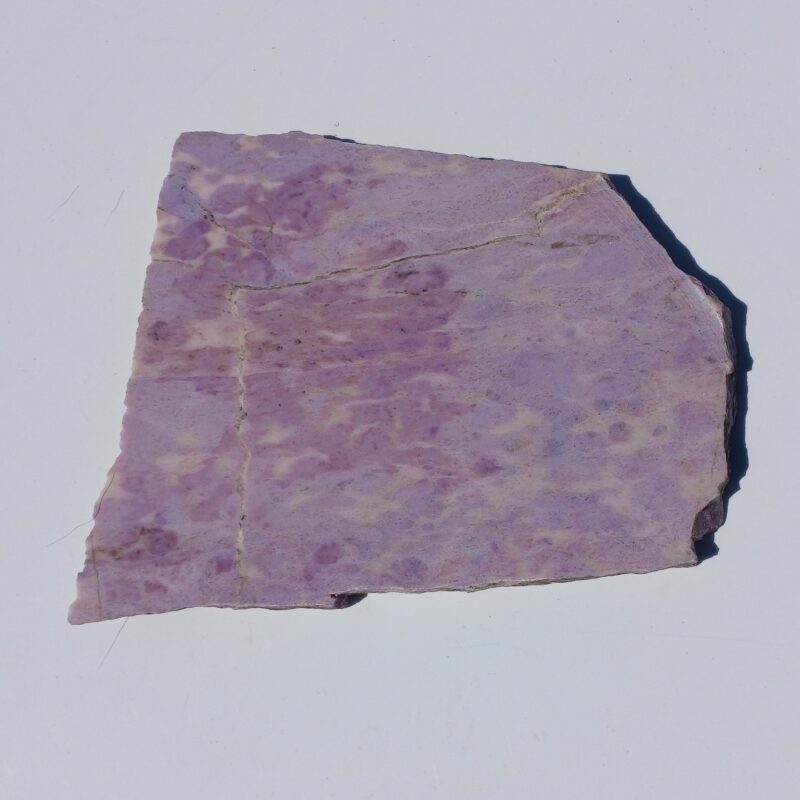
Purple Jade
One vendor offered Purple Jade from Turkey. The material features an attractive lavender hue, and this unique form of Jadite Jade is frequently utilized in high-end jewelry.
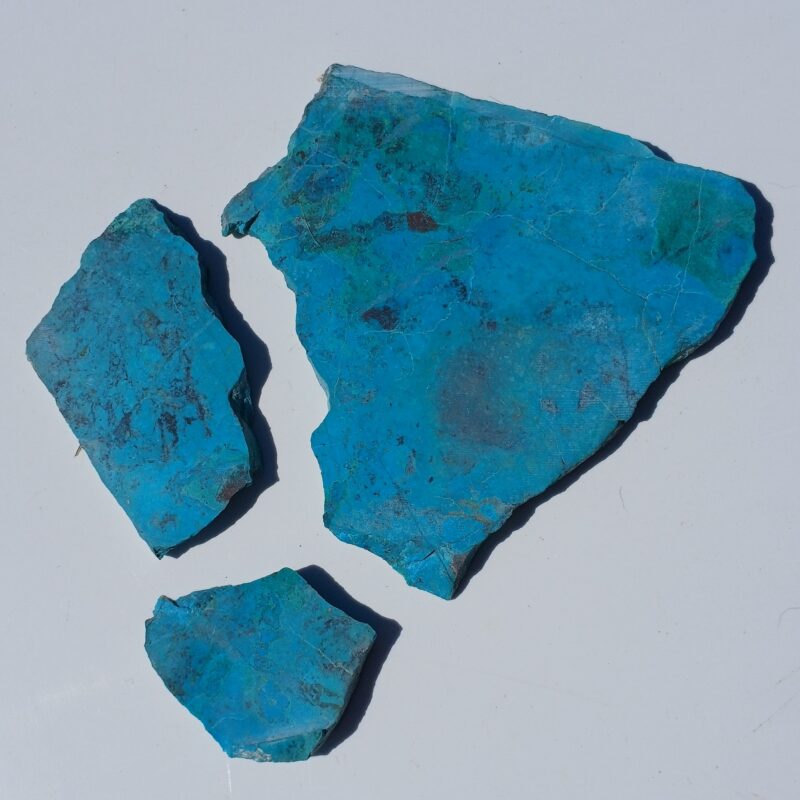
Arizona Chrysocolla
Another vendor presented an assortment of lapidary slabs in various bins, appealing to our interests. Given our preference for cutting our own slabs, we selected three specimens from this vendor. One of the purchased slabs featured a chrysocolla specimen from Arizona with exceptional coloration. We inquired about the specific origin within Arizona, but the vendor was unable to provide that information. While the exact location of origin would typically influence our decision to buy or not, the attractive coloration prompted us to make the purchase. Upon inspection, the slab exhibited a few cracks, which led us to break it into three pieces. We anticipate crafting some beautiful cabochons from this chrysocolla.
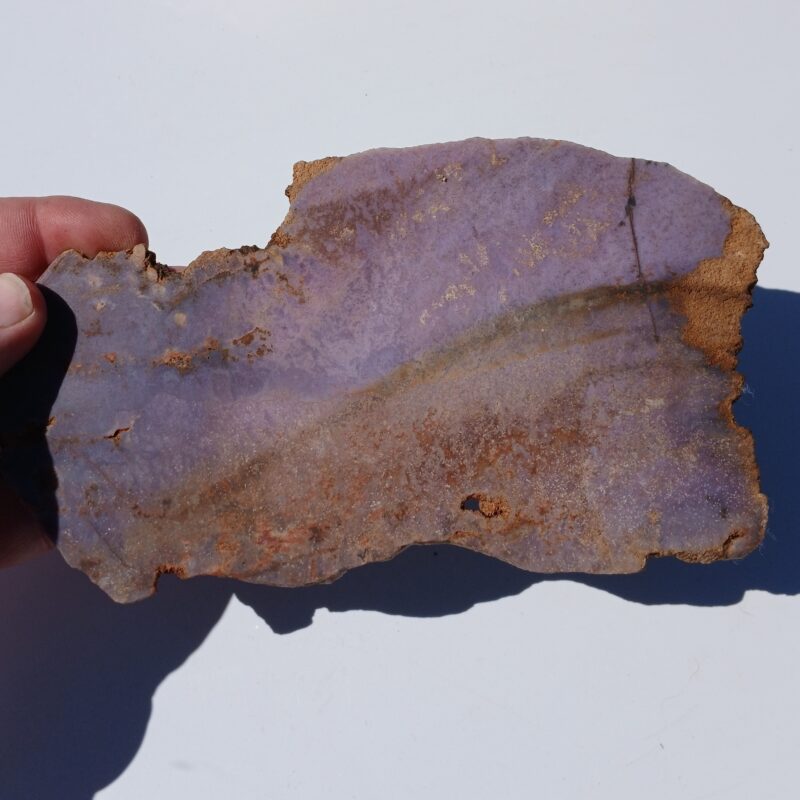
Burro Creek jasper
Another slab we purchased from the same vendor was some Burro Creek Agate. This large slab of Burro Creek Agate had some nice purple color and will make a nice addition to our collection. The Burro Creek area in Nevada is known for its agate deposits, which often feature vibrant colors and interesting patterns.
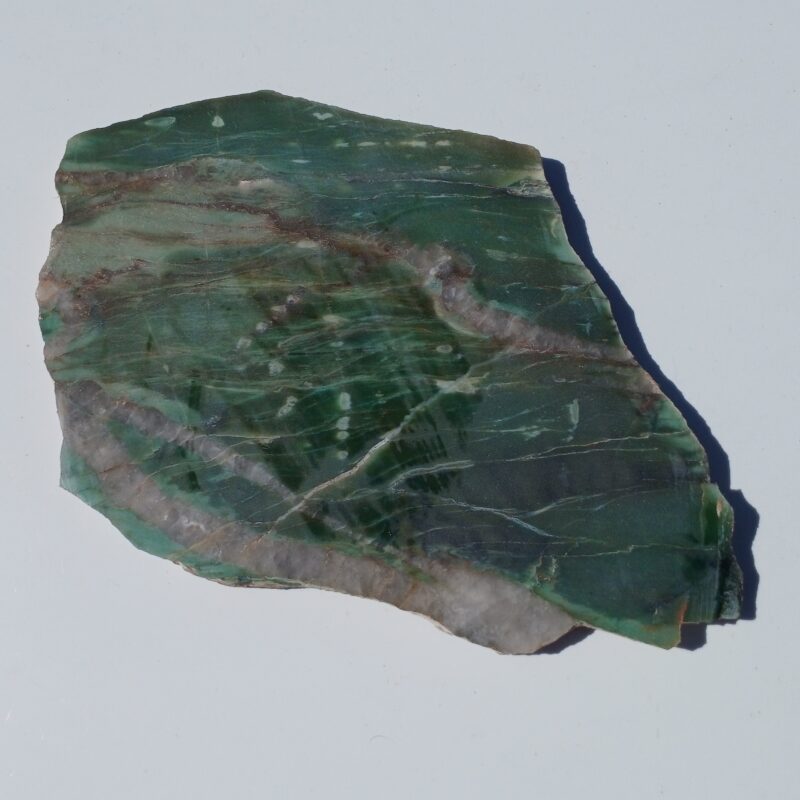
Australian Dragon Stone
The final slab purchased from the vendor was mislabeled as “Dragons Blood from Australia.” Upon questioning the vendor, he confirmed this identification. However, after conducting online research, we determined that the stone was not, in fact, Dragons Blood. We did discover a similar Australian stone, “Dragons Stone,” which closely resembled the purchased specimen in appearance. Dragons Stone is a microcrystalline quartz stone that has undergone metamorphism from fuchsite. It is formed when a fuchsite vein partially dissolves into a silica solution due to intense pressure and superheated groundwaters, which subsequently dissolve the fuchsite, creating large boulders. The green color of Dragons Stone matches that of fuchsite; however, the muscovite mica has metamorphosed into chalcedony (microcrystalline quartz). Chrysoprase, another Australian stone that is a form of chalcedony, exhibits a different shade of green compared to Dragons Stone. Additionally, Dragons Stone displays patterns not found in Chrysoprase, due to its unique mineral composition and formation process. This translucent material, similar to Chrysoprase, appears to be well-suited for crafting cabochons.
The Timpanogos Gem & Mineral Society’s annual rock and gem show provides an excellent opportunity for rock and gem enthusiasts to kick off the spring season. The event’s vibrant atmosphere and diverse offerings make it a memorable experience, whether you’re searching for unique specimens, finished jewelry, or simply looking to connect with fellow collectors.


