

Chrysocolla is not Turquoise
It is a common observation that many people who wear Chrysocolla jewelry unknowingly believe they are adorned with Turquoise. While both minerals are copper-based and share a superficial resemblance, it is crucial to understand their fundamental distinctions. From a scientific viewpoint, Turquoise is defined as a hydrous phosphate of copper and aluminum, while Chrysocolla is characterized as hydrated copper silicate. Though their appearances might be deceptive, a keen observer can differentiate them based on several key factors. These differences are rooted in their chemical makeup and physical characteristics, which become more evident with careful scrutiny and analysis.

Turquoise Characteristics
While Chrysocolla and Turquoise share a superficial resemblance, a closer examination reveals several key distinctions. A primary difference lies in their hardness; pure Turquoise is significantly harder than pure Chrysocolla, even though both are relatively soft minerals. Turquoise is celebrated for its characteristic vibrant sky blue or robin’s egg blue tones, but it also manifests in a spectrum of green hues.
The common perception of turquoise’s blue color belies the existence of a remarkable diversity, with hundreds of unique varieties each displaying its own particular features. One readily noticeable difference is the presence of “matrix,” although some varieties may exhibit only minimal or no matrix at all. Matrix, in this context, refers to the host rock or impurities embedded within the Turquoise, which often serves as a useful tool for differentiating between various varieties. The presence of matrix, combined with the rarity of a particular specimen, can substantially enhance the commercial value of a Turquoise piece.

Chrysocolla Characteristics
While Chrysocolla in its purest state is unfortunately too soft and easily broken to be used in jewelry, its character transforms when it mingles with other minerals. This combination not only increases its hardness, making it suitable for crafting jewelry, but also introduces a range of striking and colorful inclusions that enhance its aesthetic appeal. Chrysocolla is frequently discovered alongside other minerals, such as Malachite, Tenorite, Cuprite, and Azurite, with Malachite appearing to be the most commonly found companion mineral in these geological settings.
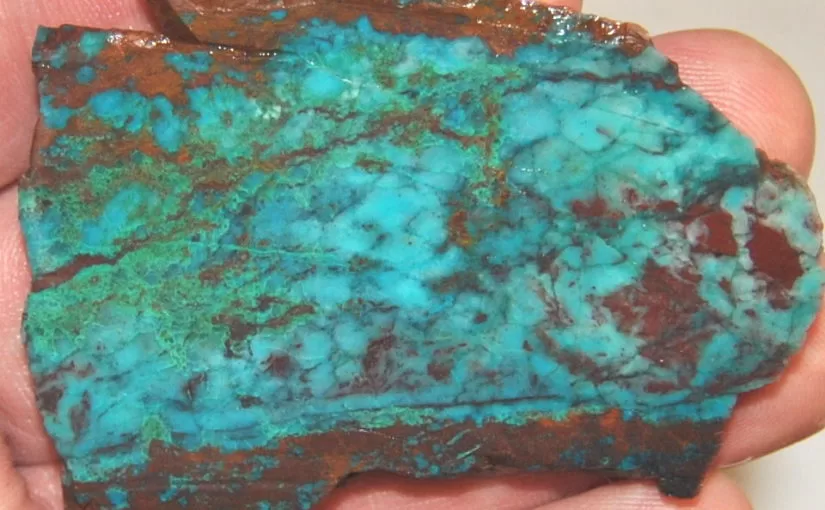
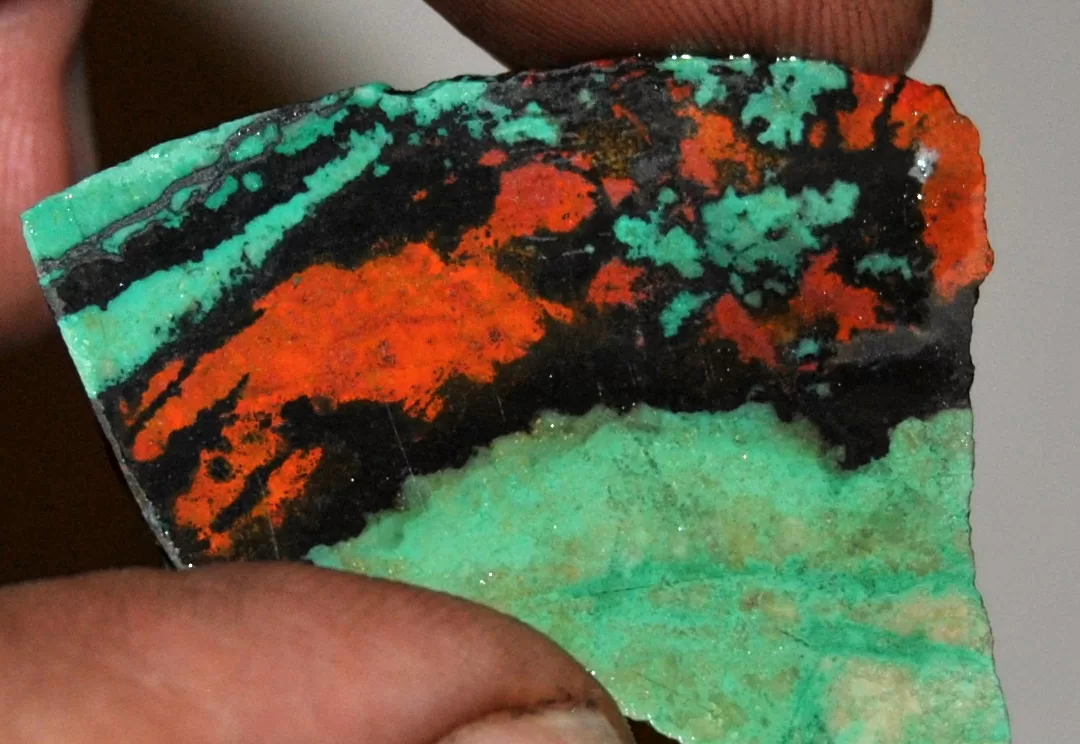
Chrysocolla exhibits itself in both opaque and translucent forms, with the latter being particularly prized and sought after by collectors and jewelry enthusiasts. Historically, it was often considered a less valuable gemstone compared to turquoise, but in recent years, Chrysocolla has experienced a remarkable surge in popularity, resulting in a noticeable increase in the prices commanded by high-quality specimens. Among the most coveted and sought-after varieties of Chrysocolla are Gem Silica Chrysocolla, Druzy Chrysocolla, Apache Chrysocolla, Sonoran Sunrise Chrysocolla, and the striking Parrot Wing Chrysocolla, each showcasing unique characteristics and aesthetic appeal.
Gem Silica
Gem Silica represents a highly sought-after and exceptionally rare variety of Chrysocolla, immediately recognizable for its intensely vibrant blue coloration and remarkable hardness characteristics. Originating as a Chalcedony-based stone that has been naturally infused with Chrysocolla, this gemstone showcases striking translucence and boasts a Mohs hardness rating of 7, which significantly surpasses the durability of Turquoise. It’s interesting to note that other comparable gemstones, such as Amethyst and Citrine, also share this same Mohs hardness rating.
When evaluating top-grade Gem Silica, several key characteristics become apparent, including optimal levels of translucence, a uniformly saturated color, and the complete absence of any inclusions or blemishes. As a result of these exceptional qualities, high-quality specimens of Gem Silica can command prices that readily exceed $200 per carat in the current market. Given the potential risk of encountering counterfeit Gem Silica, frequently produced by staining clear agate with blue dyes, it is absolutely essential for prospective buyers to proceed with a high degree of caution and discernment when making any purchasing decisions.
