
Selecting the Proper Tools for Polishing Rocks
There is nothing like seeing the transformation of seemingly ordinary rocks as they are polished into beautiful gemstones. The following guide will help you to select the polisher that is right for you.
Some of the Factors to Consider When Choosing a Rock Polisher
- Rock Type and Size: Different rocks require different polishing methods. Consider the size and shape of the rocks you plan to polish.
- Material Durability: Some rocks are more durable than others. Choose a polishing method appropriate for the hardness of your materials.
- Budget: Polishing equipment ranges in price. Determine your budget to narrow down your options.
- Processing Time: Some methods are faster than others. Assess how much time you are willing to dedicate to the polishing process.
Rotary Tumblers
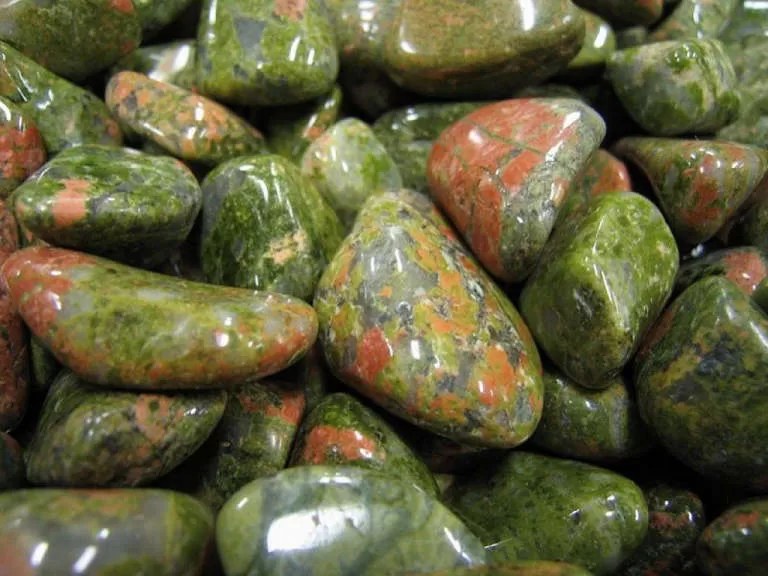
Tumbled stones. Source: Wikimedia commons
Rotary tumblers are the go-to method for most people when it comes to rock polishing, being the most popular choice today. The tumbling action replicates how waves and rivers naturally smooth and polish rocks, resulting in a beautiful, shiny finish.
While rotary tumblers are a slower polishing method, they are also the most budget-friendly option among the five techniques discussed.
The process can take several weeks. Rocks, water, and varying grits are added to the tumbler. Begin with coarse grit, then switch to finer grits as the polishing progresses over days or weeks. Continue this process with progressively finer grits until only a polishing compound is needed for the final stage.
Thoroughly wash both the rocks and the tumbler between each polishing stage before moving to a finer grit. Many people use toothbrushes or tumble stones with Ivory soap for cleaning. Any residual grit from a previous stage can contaminate the next, resulting in a poor final polish.
Rotary tumblers can also be used to polish or harden metals when using stainless steel shot.
Vibratory Tumblers
Vibratory Tumblers work similarly to rotary tumblers but offer significantly faster polishing. A process that takes weeks with a rotary tumbler can be completed in just days with a vibratory tumbler.
Different types of vibratory tumblers exist. The most inexpensive models are designed for metals, such as jewelry or shell casings. These are not suitable for polishing rocks, as they typically have low weight capacities and are not designed to hold water.
For rock polishing, choose a vibratory tumbler with a heavy-duty capacity and a liquid drain hose. A wet/dry polisher is the best option for this purpose.
Vibratory tumblers are less likely to round the corners of the stones, allowing you to maintain the original shape of your gemstones better than with rotary tumblers.
Sonic Tumblers
While sonic tumblers come with a higher initial cost than rotary or vibratory tumblers, sonic tumblers offer significantly faster polishing times. A key advantage of sonic tumblers is their simple design, featuring few to no moving parts. This translates to reduced maintenance needs and a lower likelihood of needing replacement parts.
Flat Lap Vibrating Polisher
Flat lap vibrating polishers are a specialized type of polisher. They are best suited for polishing flat stones, including items such as bookends or coasters. These polishers use a flat surface that vibrates, allowing for even polishing of the material.
Wheel Type Grinder / Polisher
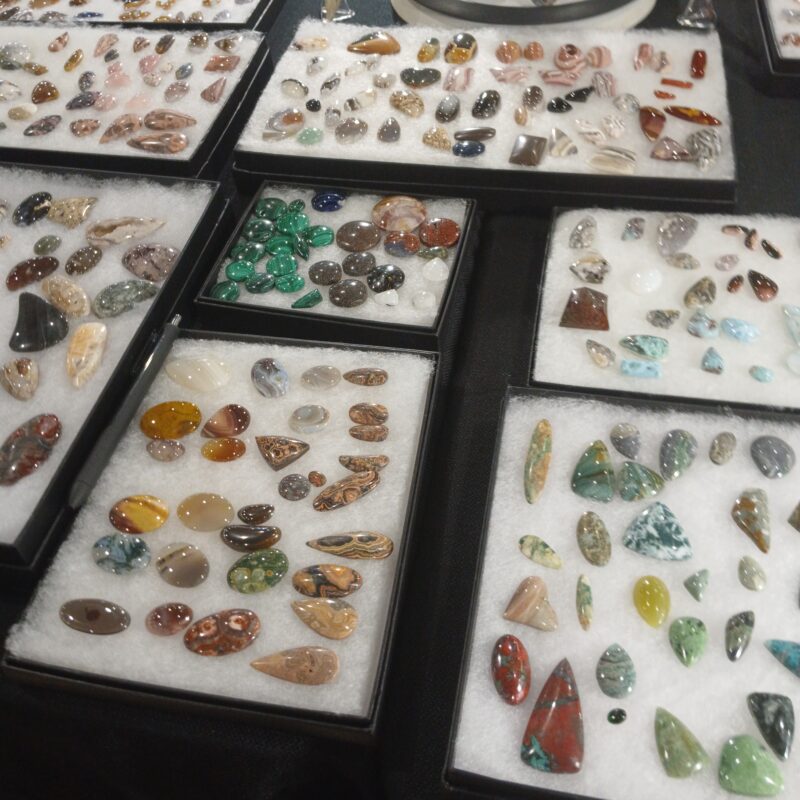
An array of cabochons ready to be used in jewelry.
Wheel-type grinders/polishers represent the most costly approach to rock polishing; however, they also offer the quickest results. With a wheel-type polisher and diamond wheels, you can shape and polish a finished cabochon in just a few minutes with sufficient experience however achieving professional results requires practice. The polishing speed and quality of the gemstones should improve as you gain experience using this type of polisher.