

Utah truly stands out due to its remarkable collection of highly sought-after rocks, minerals, and gemstones, making it a treasure trove for enthusiasts and collectors alike. It is a well-known fact that a significant portion of the most prized lapidary and gemstone materials found within the United States have their origins in the diverse landscapes of Utah. With this rich geological heritage in mind, we have compiled a list highlighting some of the most exceptional and noteworthy lapidary and gemstone materials that can be discovered within the state.
Brianhead Agate
Among the diverse array of Utah agates, Brianhead Agate holds a special place in our hearts. While its rarity or market value may not surpass some other notable varieties found within the state, our fondness for Brianhead Agate stems primarily from the cherished memories linked to the scenic Brianhead region.
This particular agate formation is situated in close proximity to the charming ski resort town of Brianhead, Utah. The fortunate aspect is that, since it is located on National Forest land, collecting these beautiful stones is permitted. However, it is crucial to note that reselling the material for any form of commercial profit is strictly prohibited, ensuring the sustainable enjoyment of this natural treasure for all visitors and enthusiasts. Brianhead Agate is renowned for its ability to display a spectrum of vibrant colors. The beauty of this stone can be further enhanced through a specific heat treatment process. When heated to around 450°F for several hours, the agate’s natural colors are intensified, particularly bringing out rich red hues and making other colors within the stone pop with remarkable vibrancy.
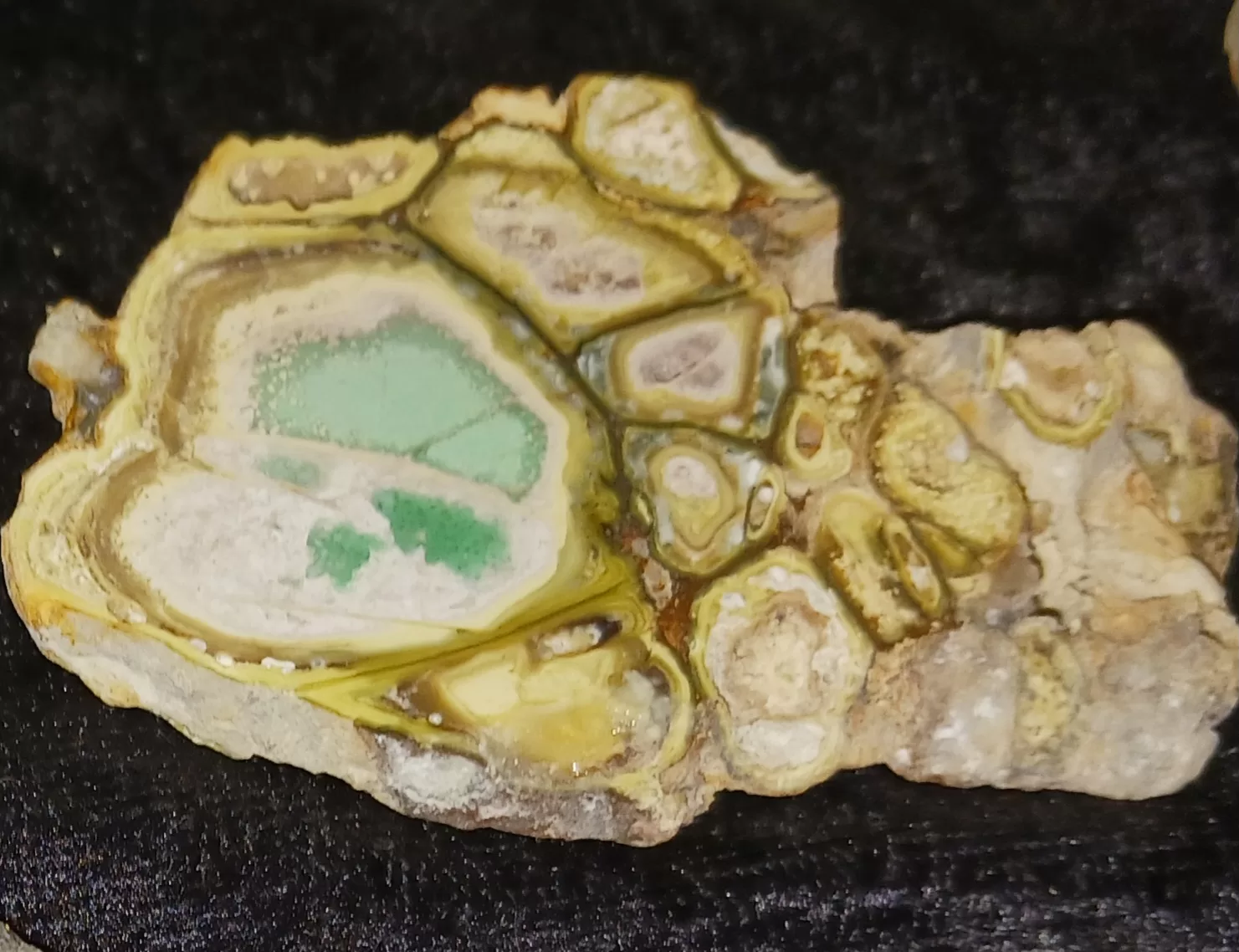
Clay Canyon (Fairfield) Variscite
If you are fortunate enough to acquire this material, you will likely want to retain it. The Little Green Monster Mine, where this material was sourced, was intentionally closed due to safety concerns. Due to the unique composition of this exceptional material and its unavailability for collection, a high-quality specimen can command a price exceeding $1000.
This distinctive Variscite is also referred to as Fairfield Variscite or Little Green Monster Variscite. As collecting this variety is no longer possible, prospective buyers must seek out specimens from occasional vintage collection sales. Exercise caution when purchasing this material given its value, as it is not uncommon for specimens to be misidentified as Clay Canyon Variscite.
Flowering Tube Onyx
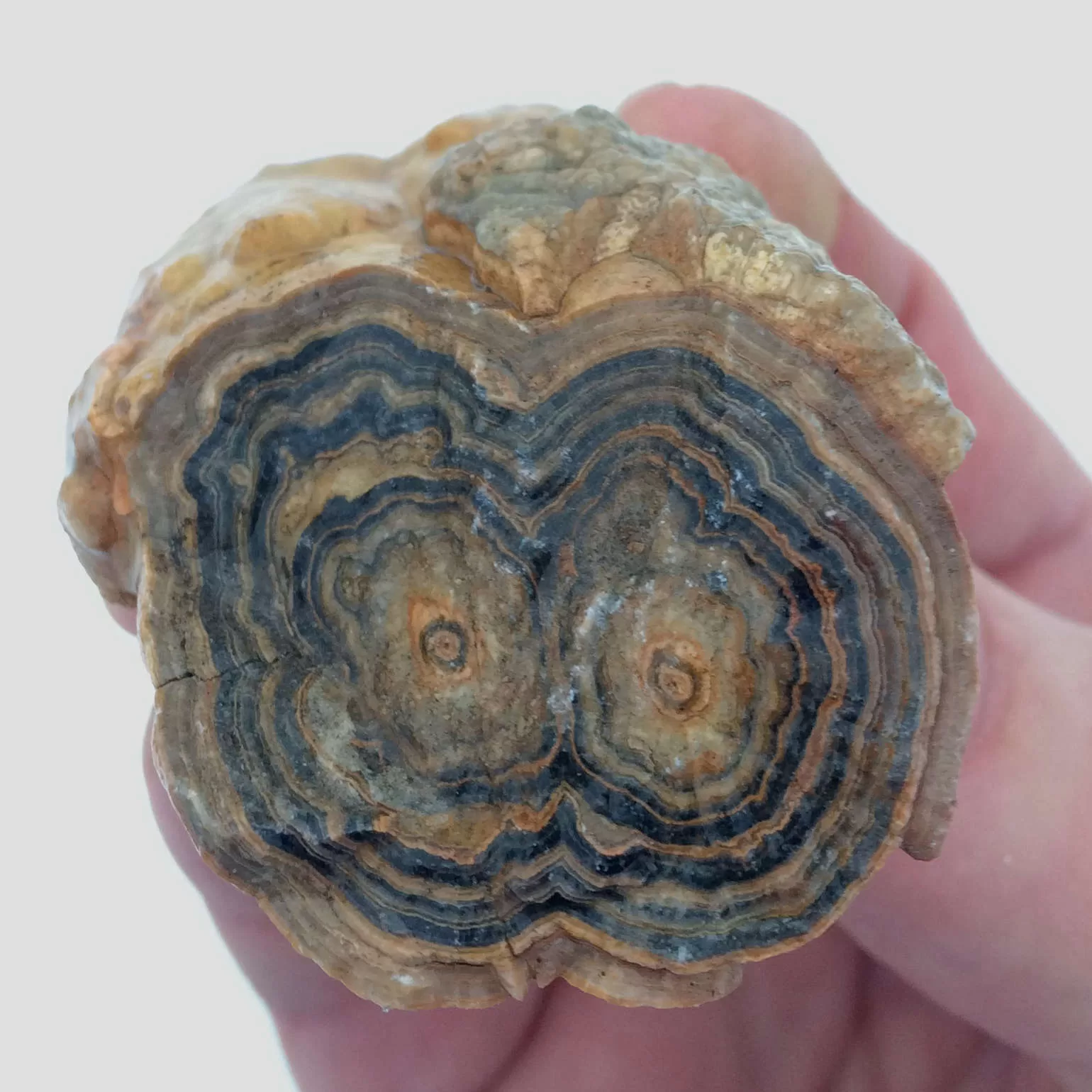
Flowering Tube Onyx used to be a readily available gemstone, commonly found just a few short years ago. However, owing to the depletion of the original mining claim, it has now become significantly rarer in its rough form, presenting a challenge for those seeking this unique material.
When handling Flowering Tube Onyx, particularly during the cabochon cutting process, it is essential to exercise caution. Overheating the stone can lead to the development of undesirable fractures, which often manifest along the naturally occurring color bands, potentially ruining the finished piece.
It is worth noting that K&O Rock Shop in Nephi, Utah, a previously trusted source for this material, is no longer in operation. Although the claim itself is widely reported to be completely exhausted, persistent rumors suggest a potential acquisition by another entity. Considering these circumstances, the most viable avenues for acquiring Flowering Tube Onyx, especially for those eager to work with this distinctive gemstone, may lie within online marketplaces or local gem & mineral shows. These platforms can connect you with knowledgeable and experienced collectors who may possess existing reserves of this increasingly sought-after Utah gemstone.
Gem Dinosaur Bone
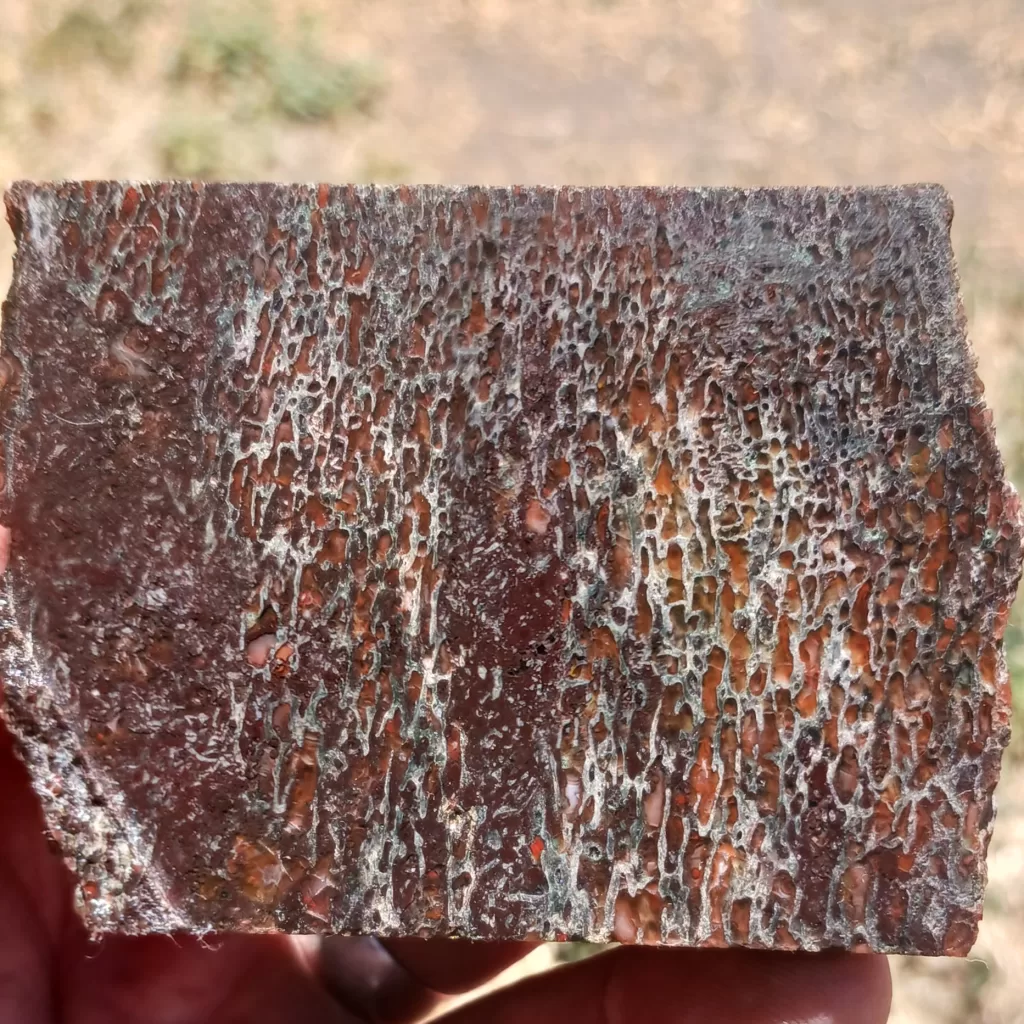
High-quality agatized dinosaur bone, often referred to as petrified dinosaur bone or simply “Gem Bone,” is recognized for its captivating colors and unique cellular structures. The most exceptional Gem Dinosaur Bone specimens are characterized by dramatic contrasts, featuring intricate black webbing within the cells that beautifully accentuates vibrant hues of yellow, orange, and red. Beyond these striking color combinations, Gem Bone can also showcase a broader spectrum of colors, encompassing shades of brown, white, blue, and gray, making each piece a truly unique and mesmerizing artifact.
Considered one of the rarest fossil types worldwide, gem-quality dinosaur bone is exceptionally sought after by collectors and enthusiasts alike. It is worth noting that some of the world’s most prized and exquisite Gem Bone specimens have their origins in the geological formations of Moab, Utah. Composed primarily of agate, the finest gem dinosaur bone attains a Mohs hardness rating that approaches 7, positioning it in the same durability range as popular quartz gemstones such as amethyst and citrine. Due to the fact that the source material is derived from privately owned lands, these remarkable specimens are most commonly found through specialized local rock shops and reputable online retailers, ensuring that the treasures of the past are accessible to those who appreciate their beauty and significance.
Topaz
Utah Topaz presents itself as a naturally occurring gemstone, distinguished by its characteristic amber hue, which, interestingly, is known to subtly transform to a clear appearance when subjected to prolonged sunlight exposure. This unique gemstone holds the esteemed position of being Utah’s officially recognized state gemstone, a testament to its significance within the state’s geological landscape. One particularly well-known and historically significant location for the collection and discovery of Topaz is Topaz Mountain, situated within Juab County, making it a prime destination for both seasoned collectors and enthusiastic gemstone enthusiasts alike.
Obsidian
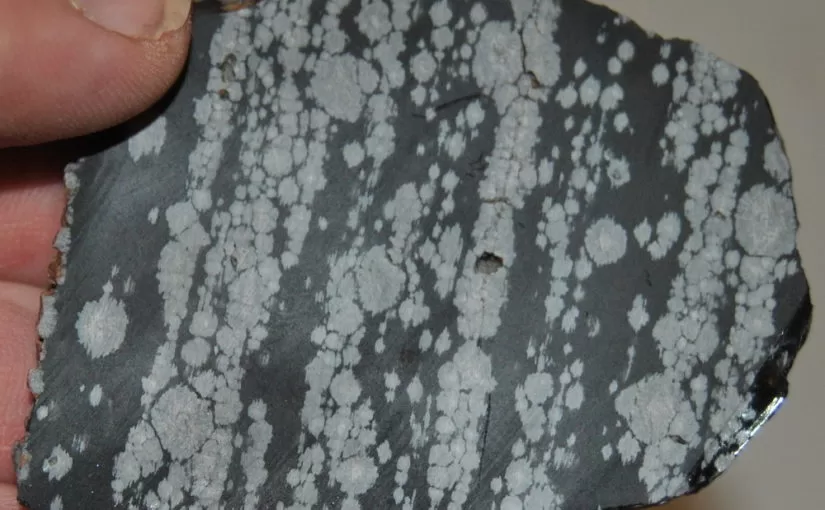
Utah is a notable locality for various types of Obsidian, including Black Obsidian, Snowflake Obsidian, Mahogany Obsidian, Silver Sheen Obsidian, and Gold Sheen Obsidian. Among these, Snowflake Obsidian is particularly prized by collectors. Obsidian, a naturally occurring volcanic glass, typically appears black but exhibits diverse colors due to various inclusions. The distinctive white spots characteristic of Snowflake Obsidian result from the breakdown of the Obsidian over time.
Deposits of Snowflake Obsidian can be found south of Delta, Utah, and detailed instructions for locating this mineral are available at http://geology.utah.gov/utahgeo/rockmineral/collecting/obsidn.htm.
Picasso Marble
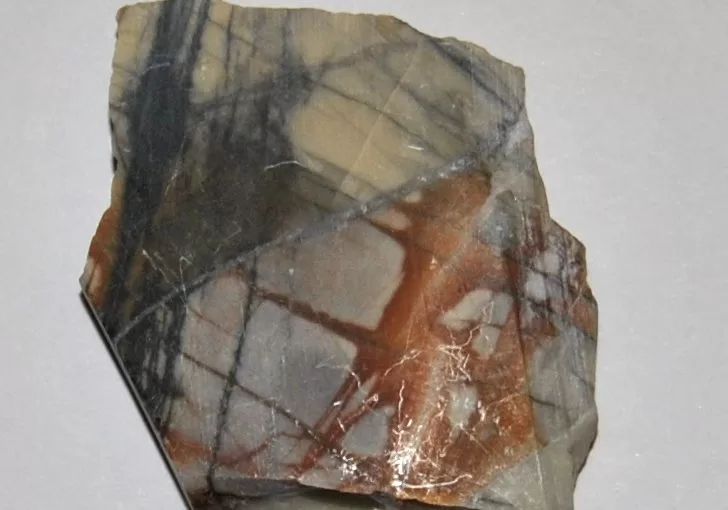
The Picasso Marble’s distinctive criss-crossing patterns of lines evoke the artistic style of Picasso, resulting from the intrusion of molten igneous material into limestone fissures. This unique aesthetic is showcased in the samples we acquired from Love the Art in Beaver, Utah, a now-closed rock shop that previously offered this exceptional stone.
Red Beryl
The most renowned type of beryl is emerald; however, it is not the most valuable. The rarest and most expensive variant, known as bixbite or red beryl, owes its striking red hue to the presence of manganese. Although descriptions of red beryl date back to the early 20th century, gem-quality red beryl was not discovered until 1958 in the Wah Wah mountains of Beaver County, Utah. High-quality red beryl can command prices of up to $10,000 per carat. When acquiring such a rare and valuable gemstone, especially as an investment, it is essential to have it certified by a registered gemologist.

Red Horn Coral
Utah Red Horn Coral is an exceptionally durable material, ideal for crafting stunning red cabochons. It is a pleasure to work with, offering a natural, vibrant appearance that is sure to appeal to those who appreciate the aesthetic of coral.
As a sustainable alternative to endangered Mediterranean corals and artificially dyed imitations, Utah Red Horn Coral presents a compelling option. The stone’s 100% natural coloration makes it an excellent choice for jewelry pieces such as rings, bracelets, or pendants.
Septarian Nodule
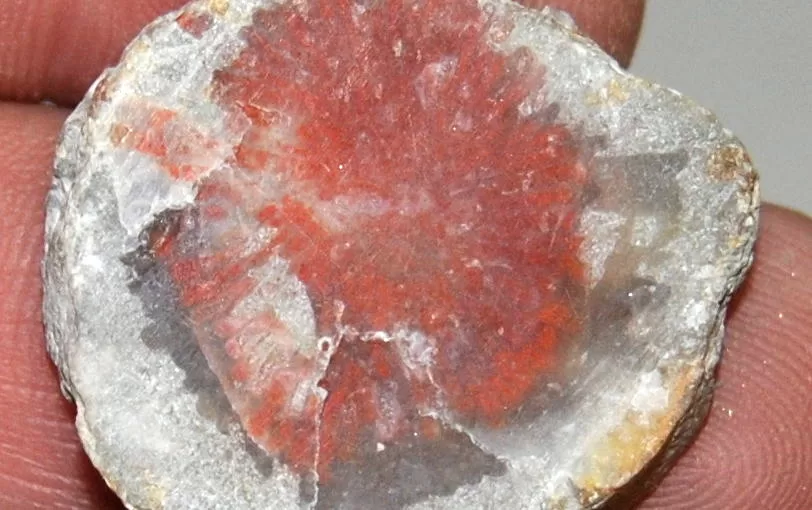
The formation of Septarian Nodules occurs over millions of years, beginning with mud encasing dead sea creatures to form mud balls. As the ocean recedes, these mud balls crack and shrink, and calcite crystals form within the cracks due to organic material seeping in. Over time, the calcite transforms into aragonite, resulting in the distinctive appearance of Septarian Nodules. These nodules can be cut and polished into various forms, including cabochons, eggs, bookends, or spheres.

Tiffany Stone
This exceptional material is extracted from the Brush Wellman beryllium mine located in Utah’s Sevier Desert. A significant portion of the material is processed at the mine while extracting beryllium. The extracted beryllium is subsequently utilized to produce metal alloys for various high-tech applications, including aircraft, missiles, satellites, as well as more ubiquitous components such as electric motors. The distinctive purple color is attributed to fluorite.
White Tiger Stone
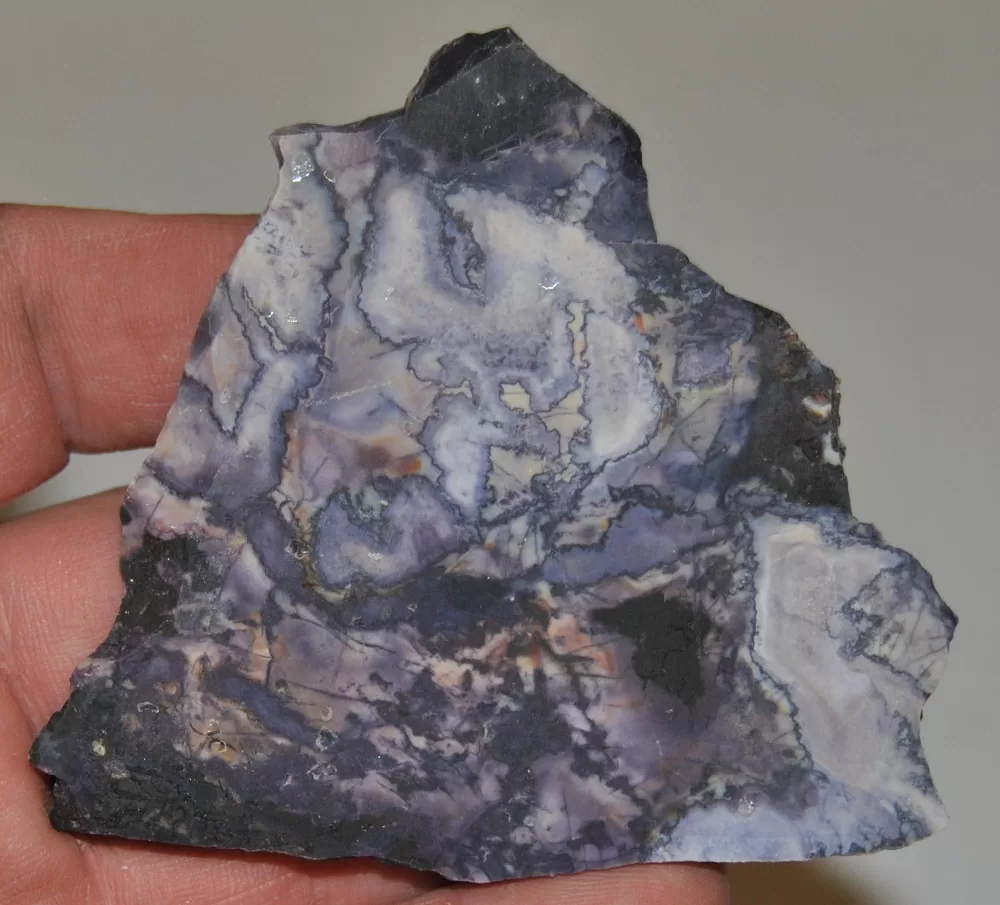
The White Tiger Stone bears a striking resemblance to Zebra Stone in appearance, which is not surprising given the proximity of the two mines. The stone’s highly contrasting black and white coloration makes it particularly striking. We have acquired some of this notable White Tiger Stone from a small rock shop in Beaver, Utah.

Other Gemstones & Lapidary Material from Utah
Golden Swirl Plume Agate
Grape Agate
Green River Agate
Hanksville Agate
Hanksville Coprolite
Hanson Creek Petrified Wood
Heber Petrified Wood
Henry Mountains Coprolite
Klondike Bluff Agate
Lucin Variscite
Marv’s Jasp Agate
Moab Red Plume Agate
Oyster Agate
Panguitch Agate
Pigeon Blood Agate
Pipeline Canyon Moss Agate
San Rafael Swell Coprolite
Serpentine
Smokey Quartz
Snowville Variscite
Sunstone
Utah Imperial Jasper
Utah Lace Opal
Wendover Moss Agate
Wendover Plume Agate
Yellow Cat Agate
Yellow Cat Petrified Wood
Yellow Feather Jasper
Zebra Marble
Utah Rock Shops
Utah is home to numerous exceptional rock shops, with some of the most remarkable ones being smaller, lesser-known establishments that offer truly unique finds. When visiting Zion National Park, consider exploring the rock shops located near the main entrances, where, amidst typical tourist fare, knowledgeable collectors can uncover remarkable specimens.
Utah Rock Hounding Locations
Below is an list of some of the rocks, gemstones, and minerals located in Utah counties:
Beaver County
Acanthite
Adularia
Alunite
Amethyst
Anhydrite
Aquamarine
Autunite
Azurite
Banded Sandstone
Barite
Biotite
Bornite
Brochantite
Calcite
Cerargyrite
Cerussite
Chalcedony
Chalcopyrite
Chlorite
Chrysocolla
Clintonite
Cuprite
Diopside
Epidote
Feldspar
Fluorite
Galena
Garnet
Grossular Garnet
Granite
Hematite
Kaolinite
Laumontite
Limonite
Ludwigite
Magnesite
Magnetite
Malachite
Molybdenite
Muscovite
Opal
Pyrite
Pyrolusite
Quartz
Scheelite
Sericite
Serpentine
Skarn
Smokey quartz
Specular hematite
Sphene
Sulfur
Szaibelyite
Tellurides
Tourmalinated quartz
Tourmaline
Tremolite
Uranophane
Wollastonite
Wulfenite
Box Elder County
Chrysocolla
Copper-bearing clays
Cuprite
Native Copper
Kyanite
Andalusite
Garnet
Staurolite
Gypsum
Wulfenite
Aurichalcite
Aragonite
Cache County
Horn coral
Quartz
Limonite after pyrite
Dolomite
Malachite
Azurite
Galena
Silver
Daggett County
Garnet
Staurolite
Kyanite
Tourmaline
Anthophyllite
Beryl
Davis County
Migmatite
Pegmatite
Gneiss
Emery County
Agate
Grape Agate
Petrified Wood
Celestite
Quartz
Calcite
Jasper
Geodes
Garfield County
Petrified Wood
Agate
Stibnite
Gypsum
Hornblende
Calcite
Coprolites
Grand County
Agate
Petrified wood
Agate pseudomorphs after barite
Iron County
Agate
Topaz
Quartz
Fluorite
Hematite
Magnetite
Siderite
Calcite
Apatite
Amethyst
Juab County
Agate
Geodes
Calcite
Petrified Palm
Pyrite
Enargite
Topaz
Red Beryl
Bixbyite
Pseudobrookite
Hematite
Garnet
Amethyst
Ilmenite
Fluorite
Calcite
Cassiterite
Durangite
Kane County
Septarian nodules
Petrified wood
Agate
Jasper
Millard County
Smokey quartz
Amethest
Albite
Garnet
Scheelite
Barite
Calcite
Galena
Magnetite
Malachite
Obsidian
Quartz
Diopside
Vesuvianite
Chalcopyrite
Molybdenite
Sunstone
Aragonite
Morgan County
Pyrite
Calcite
Piute County
Alunite
Psilomelane
Sphalerite
Fluorite
Chabazite
Stilbite
Heulandite
Mordenite
Scolecite
Calcite
Quartz
Amethystine Quartz
Bixbyite
Rutile
Corundum
Spinel
Nepheline
Salt Lake County
Pyromorphite
Pyrite
Ludwigite
Magnetite
Vesuvianite
Garnet
Actinolite
Forsterite
Serpentine
Epidote
Clintonite
Hemimorphite
Wulfenite
Cerussite
Galena
Calcite
Forsterite
Brucite
Manganese Oxides
Spinel
Quartz
San Juan County
Agate
Sanpete County
Quartz
Magnesite
Aragonite
Sevier County
Agate
Wonderstone
Gypsum
Anhydrite
Halite Opal
Summit County
Horn Coral
Petrified Wood
Tooele County
Agate
Gypsum
Oolitic sand
Cerussite
Cinnabar
Orthoclase Feldspar
Calcite
Azurite
Malachite
Hemimorphite
Aurichalcite
Pyrite
Galena
Sphalerite
Epidote
Parapierrotite
Stibnite
Quartz
Wonderstone
Sulvanite
Calciovolborthite
Fluorite
Barite
Stibiconite
Adamite
Austinite
Conichalcite
Utah County
Limonite Pseudomorphs after Pyrite
Sphalerite
Pyrite
Quartz
Birdseye marble
Algal ball limestone
Wasatch County
Spinel
Garnet
Vesuvianite
Titanitecolecite
Specular Hematite
Quartz
Ozokerite
Washington County
Petrified wood
Alaskite (Granite)
Agate
Jasper
Fossils
Wayne County
Agate
Jasper
Chert
Jet Coal
Petrified Wood
Selenite
Weber County
Calcite
Manganese